
What Is an Architecture Decision Record? A Complete Guide
An Architecture Decision Record (ADR) clarifies key technical choices for engineering teams. Learn how to document decisions that shape your system’s future—without endless meetings.
Quick Summary: Architecture Decision Records (ADRs) document why teams pick critical tech choices-like databases or APIs-by outlining the problem, rejected options, and trade-offs in a short, structured format. They differ from RFCs or design docs by locking in the final decision, not just debating it, and should live near the code they govern (e.g., in a
docs/decisions/folder) to stay linked to changes. AWS and tools like MoxieDocs emphasize keeping ADRs lightweight, versioned, and updated when dependencies or needs shift, ensuring future engineers grasp the why behind the code without digging through old discussions. The key is honesty: include drawbacks upfront to avoid surprises later.
A new engineer may see asynchronous messaging in code but not the trade-off behind it. An Architecture Decision Record keeps that reasoning clear. It captures why teams made key software architecture decisions, what they rejected, and what changed later. This guide explains practical ADR documentation, from format and ownership to review and storage. An Architecture Decision Record gives teams a shared record they can trust.
What an Architecture Decision Record Captures#
When a Decision Is Architectural#
An ADR records a choice that changes system structure, quality, or behavior. Capture decisions that are hard to reverse, such as a database, API contract, security model, or deployment pattern. A useful ADR states:
- The problem and constraints
- Options considered
- The choice, reasons, and trade-offs
- Status and expected effects
AWS guidance includes structure, dependencies, interfaces, and quality needs in this scope.

Record the why, not every build detail.
ADR Versus an RFC or Design Document#
An RFC invites discussion before agreement. A design document explains how work will be built. An ADR preserves the final, durable choice and its consequences.
| Document | Main job |
|---|---|
| RFC | Gather feedback |
| Design document | Plan implementation |
| ADR | Record the decision |
Keep ADRs short and link outward to deeper material.
Also Read: A Comprehensive Guide to GitHub Documentation for Development Teams
The Essential Sections of an Effective ADR#
Context, Decision, and Rationale#
Start with the problem, its limits, and the forces behind it. State the decision in one clear sentence, then explain why it best meets needs such as cost, speed, security, or scale. AWS lists context, the decision, and consequences as the minimum ADR content in its ADR guidance.
- Name the system area affected.
- List key constraints and decision drivers.
- Record who made the call and its status.
Tip: A future maintainer should understand the choice without reading a long design doc.

Alternatives and Consequences#
Show the serious options, including the one you rejected. Give each a short, fair trade-off, then state the good and bad results of the chosen path. The MADR template uses considered options, an outcome, and consequences for this reason.
| Section | What to capture |
|---|---|
| Alternatives | Options and why each fell short |
| Consequences | Benefits, costs, risks, and follow-up work |
Warning: Do not hide drawbacks. Honest consequences prevent surprise work later.
Also Read: Why Documentation Drift Happens and How to Prevent It
How ADRs Evolve with the Codebase#
Statuses and Superseding Decisions#
Treat accepted ADRs as history, not editable notes. Use Proposed, Accepted, and Superseded statuses. When a choice changes, write a new ADR, link it to the old one, and retain both. AWS guidance recommends this approach to preserve context.
Tip: Put ADRs near the code they govern, then link them in pull requests.
Review and Revisit Triggers#
Revisit an ADR when:
- A key dependency changes
- An incident exposes a weak trade-off
- Security, cost, or scale needs shift
- A major refactor breaks its assumptions
MoxieDocs can flag documentation drift after merges, helping teams spot ADRs that no longer match the repository.
Also Read: Living Documentation vs Traditional Docs: Which Approach Wins?
Where to Store ADRs and How Teams Adopt Them#
Repository Placement and Formats#
Keep ADRs in the same repository as the code they explain, usually under docs/decisions/. Google recommends storing Markdown ADRs close to the relevant codebase.
| Location | Best use |
|---|---|
docs/decisions/ | Most application repositories |
| Service folder | Decisions tied to one service |
Use numbered Markdown files with clear titles.
Treat the repository as the source of truth.
A Lightweight Adoption Workflow#
Make ADRs part of normal pull request work, not a separate ceremony.
- Draft an ADR for a hard-to-reverse choice.
- Review it with the related code change.
- Mark it accepted, then link any replacement record.
MADR suggests docs/decisions and numbered files. Keep records short, and require rationale before approval.
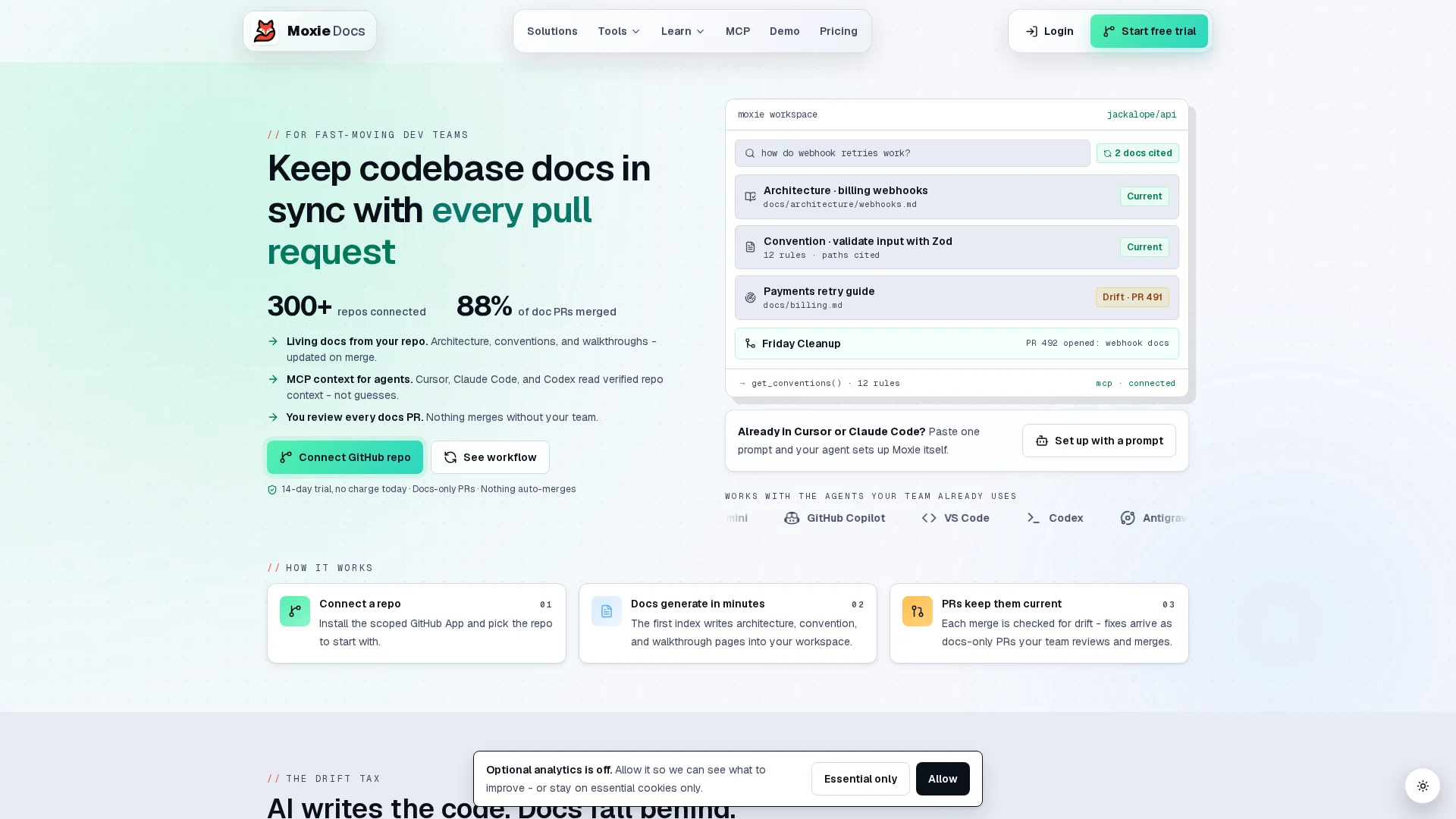
Keep ADR context current as code changes. Try MoxieDocs to flag documentation drift and maintain an honest engineering record.
Frequently Asked Questions#
Q1: what is an architecture decision record#
An ADR is a short note that explains a key technical choice, its context, and its trade-offs. It gives future contributors a clear record of why the team chose one path.
Q2: How do Architecture Decision Records (ADRs) help teams maintain consistency as code evolves?#
ADRs set shared rules for repeat choices. Engineers can check past decisions before changing patterns, which limits conflicting designs and makes reviews faster.
Q3: What are the key sections of an effective Architecture Decision Record?#
Include a title, status, context, decision, options considered, consequences, and date. Keep each section brief, specific, and linked to the real problem the team faced.
Q4: Why should ADRs be stored in the same repository as the code?#
Repository-based ADRs change through the same review process as code. Contributors see them near the system they explain, and version history shows when decisions changed.
Conclusion#
ADRs preserve context, choices, trade-offs, and outcomes. Keep them brief, versioned, and close to code. AWS guidance recommends new records when decisions change, protecting a clear team history.
Republish or cite this article
You're welcome to republish this piece in full or in part. We just ask that you credit the original with a link back. See our republishing guidelines.
Attribution snippet
<p>This article was originally published on <a href="https://moxiedocs.com/blog/what-is-an-architecture-decision-record-a-complete-guide">Moxie Docs</a>.</p>Cite this article
The Moxie Docs team. "What Is an Architecture Decision Record? A Complete Guide." Moxie Docs, August 14, 2026, https://moxiedocs.com/blog/what-is-an-architecture-decision-record-a-complete-guide.
Read next
Comparing AI Coding Conventions in Auto Documentation and AI Documentation
Explore a comprehensive comparison of AI coding standards in auto documentation and AI documentation workflows, helping engineering leaders and developers optimize their practices.
AI Code Conventions: How Moxie Docs Compares to DocuWriter.ai
Compare Moxie Docs and DocuWriter.ai to evaluate AI code standards for documentation. Ideal for engineering leaders and developer-tool buyers seeking top AI documentation platforms.