
GitHub Documentation Gets Real-Time Collaboration Feature Update
Discover the latest GitHub documentation update featuring real-time collaboration tools, enhancing teamwork for software developers, DevOps, and technical writers.
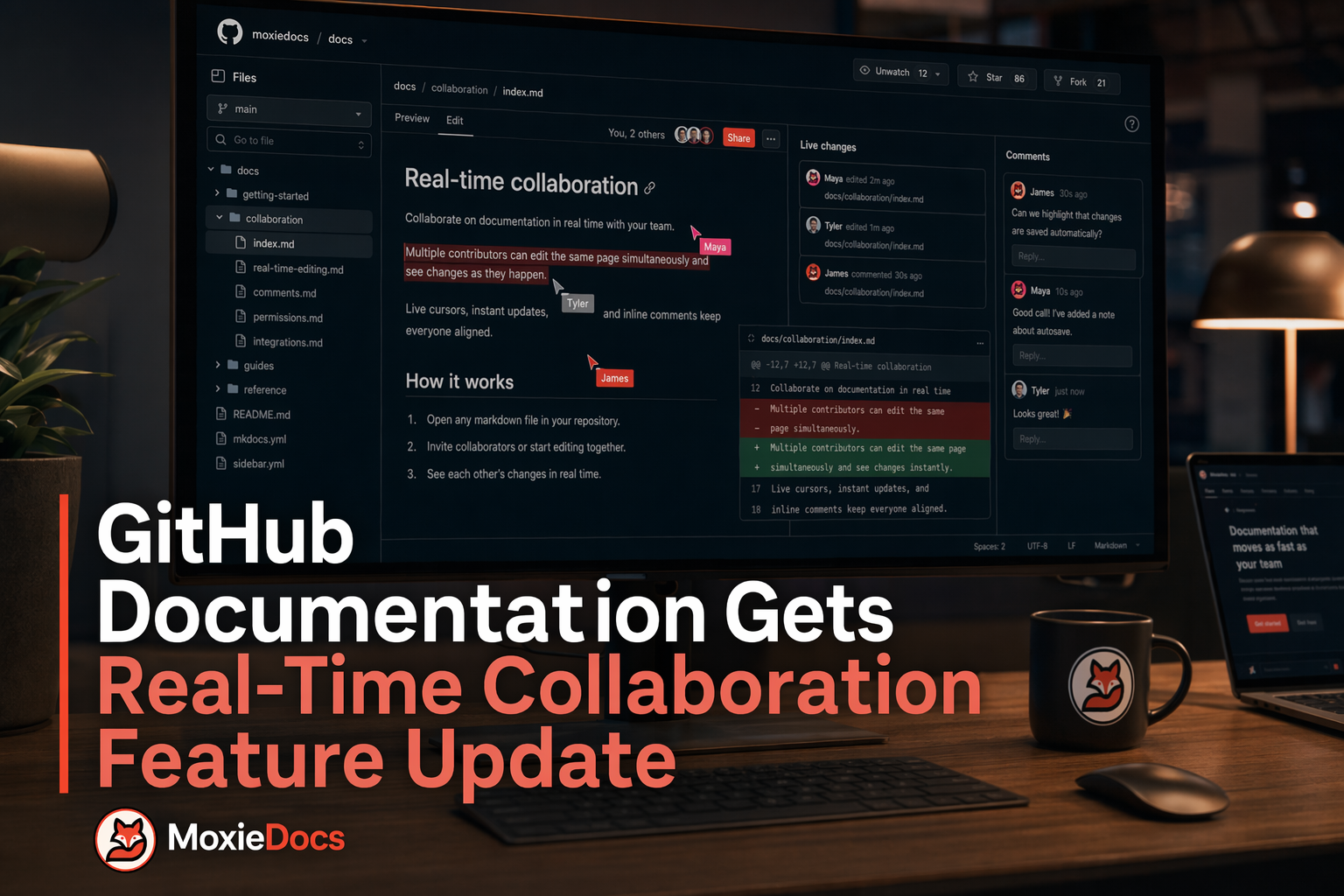
Quick Summary: Teams can now edit GitHub documentation in real time alongside engineers, speeding up updates and reducing errors. This change allows live collaboration during the writing and review process, making docs more accurate and current. It fits into GitHub's broader goal of streamlining workflows and keeping documentation tightly integrated with code changes. GitHub Documentation is getting a Real-Time Collaboration update, and that matters for teams tired of slow doc reviews. Docs often trail code because edits, review, and approval happen in separate steps. For remote teams, that means stale guides and broken examples. This piece covers how Real-Time Collaboration improves GitHub Documentation, where Real-Time Collaboration fits among Code Collaboration Tools, and why maintainers can trust this workflow shift.
What the real-time collaboration update changes for GitHub Docs teams#
Docs work gets faster when writers and engineers can edit in the same flow instead of tossing pull requests back and forth. GitHub already runs Docs as an open repo with PR-based publishing, and merged changes can reach the live site within 24 hours, according to GitHub Docs.
Faster edits without waiting for a separate review cycle#
Real-time collaboration cuts the slow part of docs work:
- Writers fix wording while engineers confirm facts
- Review comments turn into live edits, not long async threads
- Small errors get caught before a formal approval pass
This matters most for release notes, setup steps, and UI docs that go stale fast.
| Old docs flow | Real-time flow | Team impact |
|---|---|---|
| Draft, wait, review later | Draft together | Fewer review rounds |
| Engineer reviews from memory | Engineer edits live | Better accuracy |
| Fixes land after merge pressure | Fixes happen during writing | Faster publish |
Better coordination between writers and engineers#
GitHub’s newer docs automation push also shows the bigger shift: teams want docs tied closer to code changes, with engineers reviewing earlier, not later, as shown in GitHub’s 2026 workflow write-up.
- Writers get answers while context is fresh
- Engineers spend less time restating change details
- Maintainers see cleaner PRs with fewer follow-up edits
If your team already uses Moxie Docs, this kind of live editing pairs well with drift checks after each merge.
Also Read: A Comprehensive Guide to GitHub Documentation for Development Teams
Why real-time collaboration improves accuracy and lowers docs drift#
Reducing stale instructions before they reach readers
Real-time collaboration cuts the lag between “code changed” and “docs caught up.” GitHub already supports live collaborative editing in Codespaces through VS Code Live Share in a codespace, so writers, engineers, and reviewers can fix steps while the change is still fresh. That matters because stale setup notes usually slip in during handoff gaps, not during review.
The shorter the gap between merge, review, and doc edit, the less drift you create.

A cleaner path from code change to doc update
GitHub’s own 2026 write-up on cross-repo documentation workflows shows why this works: docs PRs move faster when they start from the code diff and reach the same subject expert early. For teams using Moxie Docs, that workflow gets tighter because drift is flagged with each merge, not weeks later.
Also Read: GitHub Documentation Improvements Drive Better Developer Support
How teams can use the update in day-to-day documentation work#
Best-fit documentation tasks
Use real-time collaboration for fast-moving docs work tied to pull requests. GitHub now supports richer pull request context in Copilot Chat, so reviewers can discuss diffs without bouncing between tools, according to GitHub’s changelog.
- Release note edits
- API change summaries
- Setup guide fixes
- README updates after merge
- SME review on draft docs
| Best fit | Why it works |
|---|---|
| PR-linked docs | Context stays close to the code |
| Shared review passes | Writers and engineers edit together |
| Small accuracy fixes | Faster than async comment loops |

Operational guardrails for teams
Set simple rules before teams jump in.
- Keep one owner for final merge.
- Limit live edits to small, scoped docs.
- Use repo instructions like AGENTS.md to guide review tone and standards, as noted in GitHub’s update.
If your team already uses Moxie Docs, pair live editing with drift checks after merges.
Also Read: GitHub Documentation Gets AI Upgrade with New Copilot Features in 2026
How this fits GitHub’s broader collaboration roadmap#
A continuation of GitHub’s workflow-first tooling#
This update fits GitHub’s bigger push to keep work inside the same flow teams already use. GitHub’s Q1 2026 roadmap frames the platform as an AI-powered SDLC that connects planning, coding, review, and ops in one place, according to the GitHub roadmap webinar. Real-time docs editing follows that same path: fewer handoffs, faster review, and less drift. It also lines up with GitHub’s move toward agentic docs workflows, where docs changes happen closer to the pull request itself, as shown in GitHub’s cross-repo documentation post.
Keep GitHub docs accurate after every live edit. Try Moxie Docs to catch drift, update docs with each merge, and keep repo knowledge trustworthy.
Frequently Asked Questions#
Q1: How does the real-time collaboration feature update enhance GitHub documentation workflows?#
Teams can edit, review, and resolve doc changes together, so feedback lands faster and fewer notes get lost between pull requests, chats, and handoffs.
Q2: What are the benefits of Moxie Docs integration with GitHub's real-time collaboration features?#
Moxie Docs helps teams keep fast-moving edits aligned with the codebase. It flags drift after merges, updates living docs, and cuts the cleanup work that usually follows rushed collaboration.
Q3: How does real-time collaboration impact the accuracy and maintenance of GitHub repository documentation?#
Accuracy improves when writers, engineers, and reviewers fix issues at the same time. Maintenance gets easier because small updates happen continuously instead of piling up into stale, risky doc debt.
Conclusion#
GitHub docs work is getting faster and tighter. GitHub’s docs changelog and its 2026 cross-repo workflow update both point to the same shift: fewer handoffs, quicker reviews, and docs that stay closer to shipped code.
Republish or cite this article
You're welcome to republish this piece in full or in part. We just ask that you credit the original with a link back. See our republishing guidelines.
Attribution snippet
<p>This article was originally published on <a href="https://moxiedocs.com/blog/github-documentation-gets-real-time-collaboration-feature-update">Moxie Docs</a>.</p>Cite this article
The Moxie Docs team. "GitHub Documentation Gets Real-Time Collaboration Feature Update." Moxie Docs, July 9, 2026, https://moxiedocs.com/blog/github-documentation-gets-real-time-collaboration-feature-update.
Read next
Ship cleaner PRs with agentic AI: use MCP context and living docs
Improve code quality with agentic AI (Claude Code, Cursor) using MCP context and living docs. Benchmarks, prompts, and PR tips—plus how Moxie Docs helps.
MCP Security Risks Explained: Tool Poisoning, Confused Deputies, and the Lethal Trifecta
MCP servers introduce a new attack surface: tool poisoning, rug pulls, confused deputy, and the lethal trifecta. What is real, and how to mitigate it.