
Comparing AI Coding Conventions in Auto Documentation and AI Documentation
Explore a comprehensive comparison of AI coding standards in auto documentation and AI documentation workflows, helping engineering leaders and developers optimize their practices.
- documentation
- industry-trends
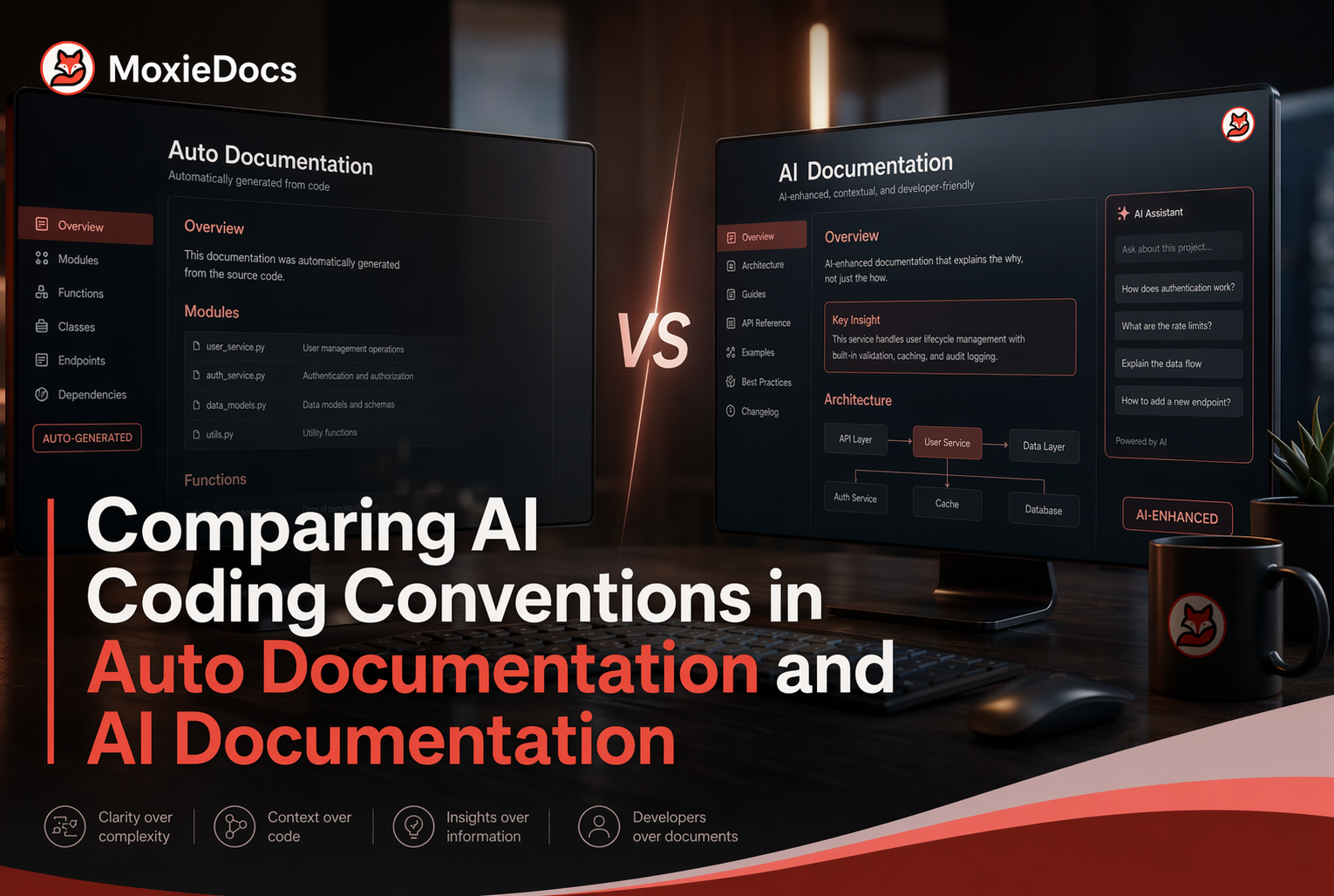
Quick Summary: Auto documentation tools generate quick, code-based docs but can copy bad habits, while AI documentation practices enforce explicit standards for consistent, reviewable content. Teams that prioritize speed use auto tools, but those seeking long-term accuracy and governance set clear coding rules and integrate them into workflows. Combining both approaches with standards-driven automation offers the best balance for maintaining reliable, scalable documentation.
Teams usually choose between speed and control. Auto Documentation Tools help you generate docs fast from a live repo. AI Documentation Practices work better when you need docs that stay consistent, reviewable, and tied to clear AI Coding Standards. That tradeoff matters to engineering leaders, maintainers, DevOps teams, and technical writers.
The real choice is not just tool versus tool. It is whether you trust generation alone or build a workflow around AI Coding Standards, prompts, and review rules. This comparison shows where each model fits, how AI Coding Standards change output quality, and which setup works best for onboarding, API docs, and long-term maintenance.
AI Coding Standards at a Glance#
| Auto documentation tools | AI documentation practices | |
|---|---|---|
| Primary purpose | Generate docs automatically | Control how AI documents code |
| Best for | Fast repo-to-doc workflows | Teams with written standards |
| Convention handling | Mostly inferred from code | Explicit and reusable |
| Update model | Regenerates from code changes | Updates with prompts and rules |
| Governance level | Lower unless configured | High when instructions are maintained |
| Typical output | README, API, architecture docs | Docs, guidance, and review-ready content |
How Auto documentation tools and AI documentation practices Compare#
Auto documentation tools#
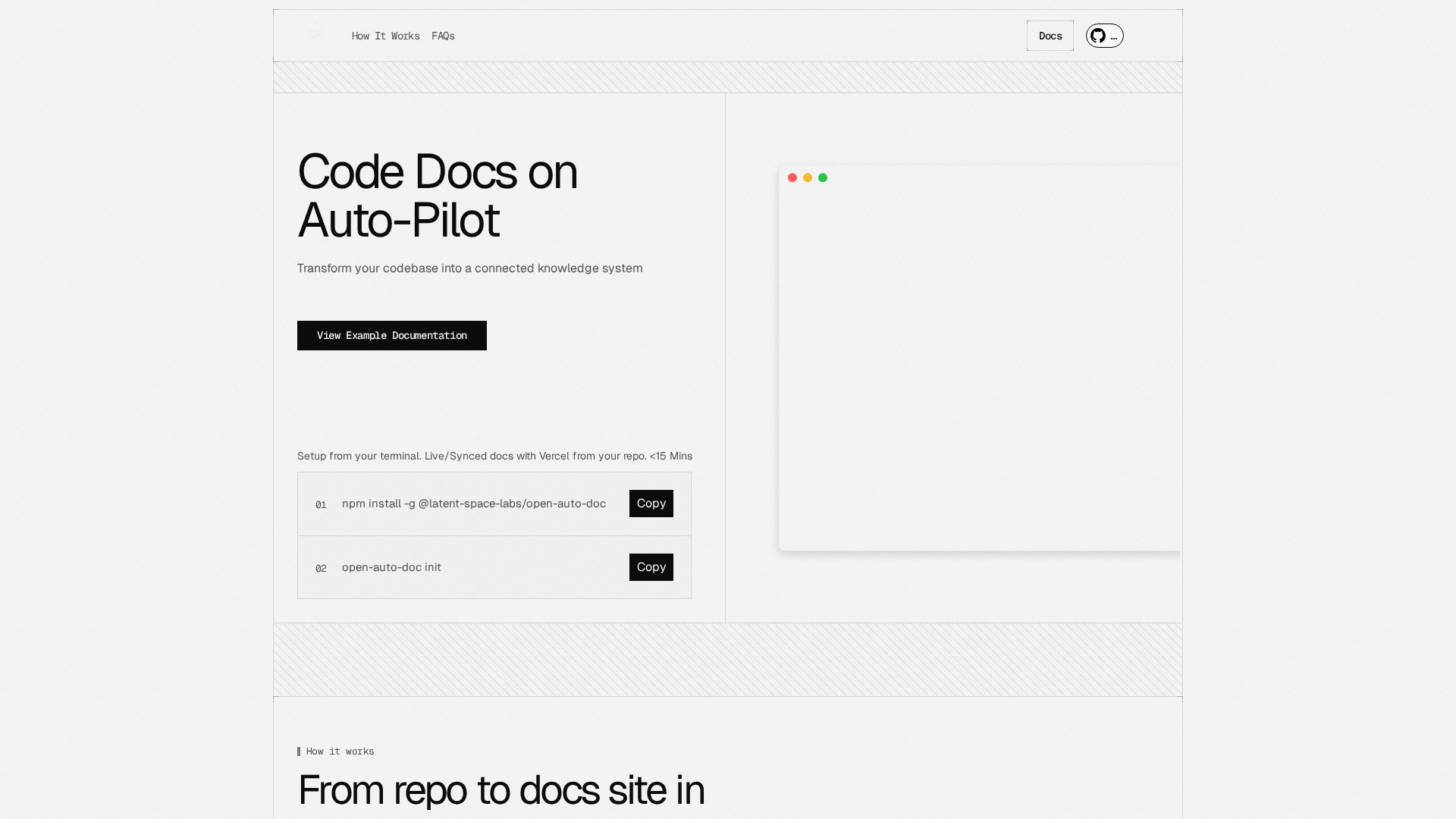
Auto documentation tools create docs from repo content with little manual writing. They fit teams that need fast README, API, and architecture output, especially when speed matters more than strict writing rules. In this comparison, they represent the automation-first path, where conventions are often inferred from code and updates follow code changes.
AI documentation practices#
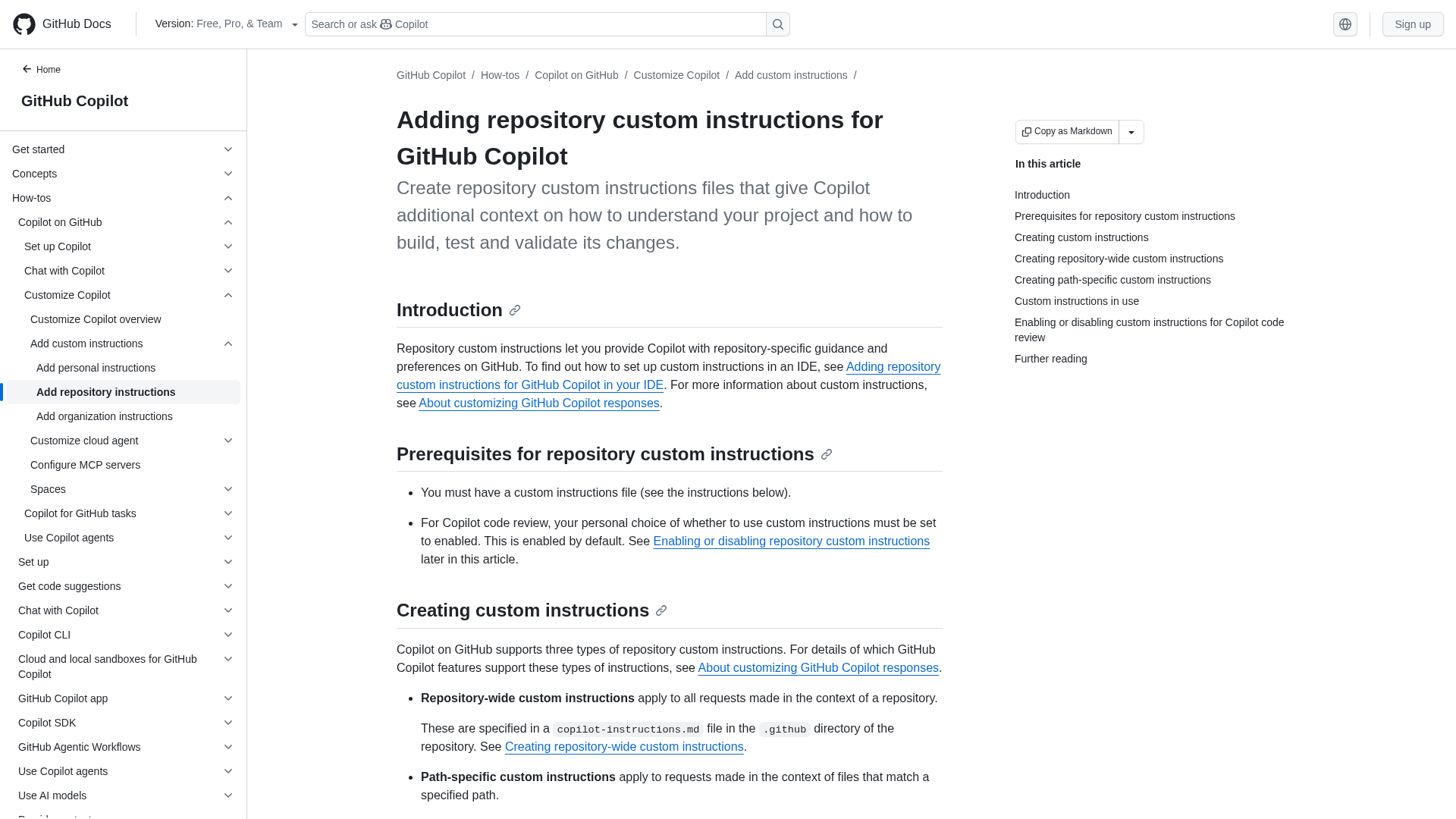
AI documentation practices use written instructions, rules, and standards to shape how AI documents code. They fit teams that want repeatable, review-ready docs with stronger governance. In this comparison, they represent the standards-first path, where conventions stay explicit, reusable, and easier to enforce over time.
How Each Approach Handles Coding Conventions#
Auto documentation often works from implicit patterns. It scans code, reads comments, and guesses the team’s style from what already exists. That is fast, but it can copy bad habits too. AI documentation works better when teams set explicit rules first. Google’s engineering guidance says style guides are more than formatting. They define the conventions that govern code, and consistency makes large codebases easier to understand, as noted in Software Engineering at Google. In practice, the split looks like this:
- Implicit pattern approach: follows what the repo already does
- Explicit rule approach: follows named standards, terms, and structure
- Best result: pattern matching plus enforced rules

Documentation quality rises when code conventions are shared by writers, reviewers, and AI agents. A style guide helps teams write clear, consistent technical docs, according to Google's developer documentation style guide. Without that base, one tool may call the same thing a service, another a worker, and a third an agent. That drift hurts search, onboarding, and trust.
Use a simple rule stack:
- Define naming, file structure, and comment rules.
- Apply them in prompts, reviews, and merge checks.
- Keep docs synced as code changes.
Moxie Docs fits this model well because it treats conventions as a living workflow, not a one-time doc export.
Also Read: AI Code Conventions: How Moxie Docs Compares to DocuWriter.ai
Accuracy, Consistency, and Maintenance Over Time#
Auto-generated docs stay accurate longest when the source is narrow and close to code. They do well with API shapes, params, types, and change logs tied to merges. That is the safe zone. A large study of 3,000+ GitHub projects found outdated code references are common, with 28.9% of popular projects currently showing at least one stale reference and 82.3% going stale at some point in history, according to Empirical Software Engineering research. Auto-doc systems reduce that risk by pulling facts from the repo instead of a separate wiki.
- Strongest for:
- API reference
- Inline explanations from code
- Release-linked updates
Auto-doc wins on speed and freshness when the code itself is the truth source.
Governed AI documentation stays stronger once teams need meaning, not just extraction. It handles naming rules, voice, approval paths, and cross-repo consistency better over time. Research on documentation debt found missing docs, outdated content, and wrong code examples were the most common defects, and recommended dynamic generation plus automated testing from a single robust source, per this 2023 study. That is the gap governed workflows close.
- Strongest for:
- Architecture context
- Decision history
- Terminology control
Moxie Docs fits here well because it pairs live repo context with drift detection, so teams keep docs honest after every merge.
Also Read: Ultimate Guide to Auto Documentation for Development Teams
Team Workflow, Onboarding, and Code Review#
Onboarding new contributors faster#
Teams ramp people faster when docs mirror the codebase and the review path is clear. Microsoft’s engineering playbook says good documentation helps onboarding and handoff, while missing or stale docs slow setup and ownership Microsoft documentation guidance.
A strong AI documentation workflow should give new contributors:
- a clear repo map
- expected naming and comment patterns
- PR and test rules tied to real code

If your auto documentation tool only writes summaries, new hires still guess. If your AI documentation system applies coding conventions, onboarding gets more repeatable because the rules show up in generated docs, review notes, and update flows. Moxie Docs fits well here because it keeps docs current as merges happen, so newcomers read what exists now, not what existed last quarter.
Fast onboarding comes from fewer hidden rules, not longer wikis.
Reducing review friction and style debates#
Code review should improve code health, not turn into endless opinion fights. Google’s review guidance says style guides should settle pure style issues, and reviewers should favor progress when a change improves the system Google code review standard.
Use conventions to move low-value debate out of PRs:
- define style once
- enforce it in docs and templates
- let reviewers focus on design, risk, and clarity
This cuts noise like:
- naming arguments with no standard
- comment format debates
- docs drift after merge
The best AI documentation workflow lowers review load by making standards visible before the PR opens.
Tooling, Automation, and Integration Strategy#
What automation should do by default#
Automation should handle the repeatable work every time code changes. NIST says modern DevSecOps pipelines move software through build, test, package, and deploy stages, so doc workflows should attach to that same path, not sit outside it in a wiki review queue NIST CI/CD guidance. Good defaults include:
- detect changed files and impacted docs
- regenerate references, summaries, and architecture notes
- flag drift before merge
- open reviewable updates in pull requests

If docs need a separate manual trigger, they will fall behind.
What instructions and standards should control#
Instructions should control tone, scope, ownership, and risk. Standards should decide what the agent may write, what it must cite, and when humans must review. NIST’s SSDF stresses using a common vocabulary and integrating practices into the SDLC, which fits AI documentation well NIST SSDF draft. Use standards to define:
- required doc sections
- naming and version rules
- approval gates for sensitive changes
- traceability from code diff to doc diff
Moxie Docs fits best when teams want this loop to stay live after every merge, not just during one-time generation.
Also Read: AI Code Conventions in 2026: Emerging Trends and Industry Insights
Which Should You Choose for AI Coding Standards and Documentation?#
Pick auto documentation tools if your main goal is speed. They help teams ship docs fast, reduce manual work, and cover common outputs like API references or README drafts. This works well for fast-moving repos, prototypes, and teams that need a first pass right away. Research on repository-scale documentation still shows that generation quality can vary when context is limited, especially across large codebases according to ACL 2026 research.
Choose AI documentation practices if your main goal is consistency. That means setting rules for tone, structure, review gates, ownership, and update triggers. Docs-as-code workflows keep documentation in the same review and CI path as code, which helps teams keep docs aligned with changes as Sourcegraph explains. If you care about trust, reuse, and governance, standards matter more than raw generation speed.
For most teams, the best choice is both together. Use automation to draft and refresh content, then use standards to control quality and stop drift. That mix gives you:
- Faster output
- More stable naming and structure
- Clear review rules
- Better handoff between engineers and writers
If AI writes more code, your team needs a repeatable doc workflow, not just a faster doc generator.
That is where platforms like Moxie Docs fit naturally. They combine automatic updates with living documentation controls, which is usually the smarter long-term setup.
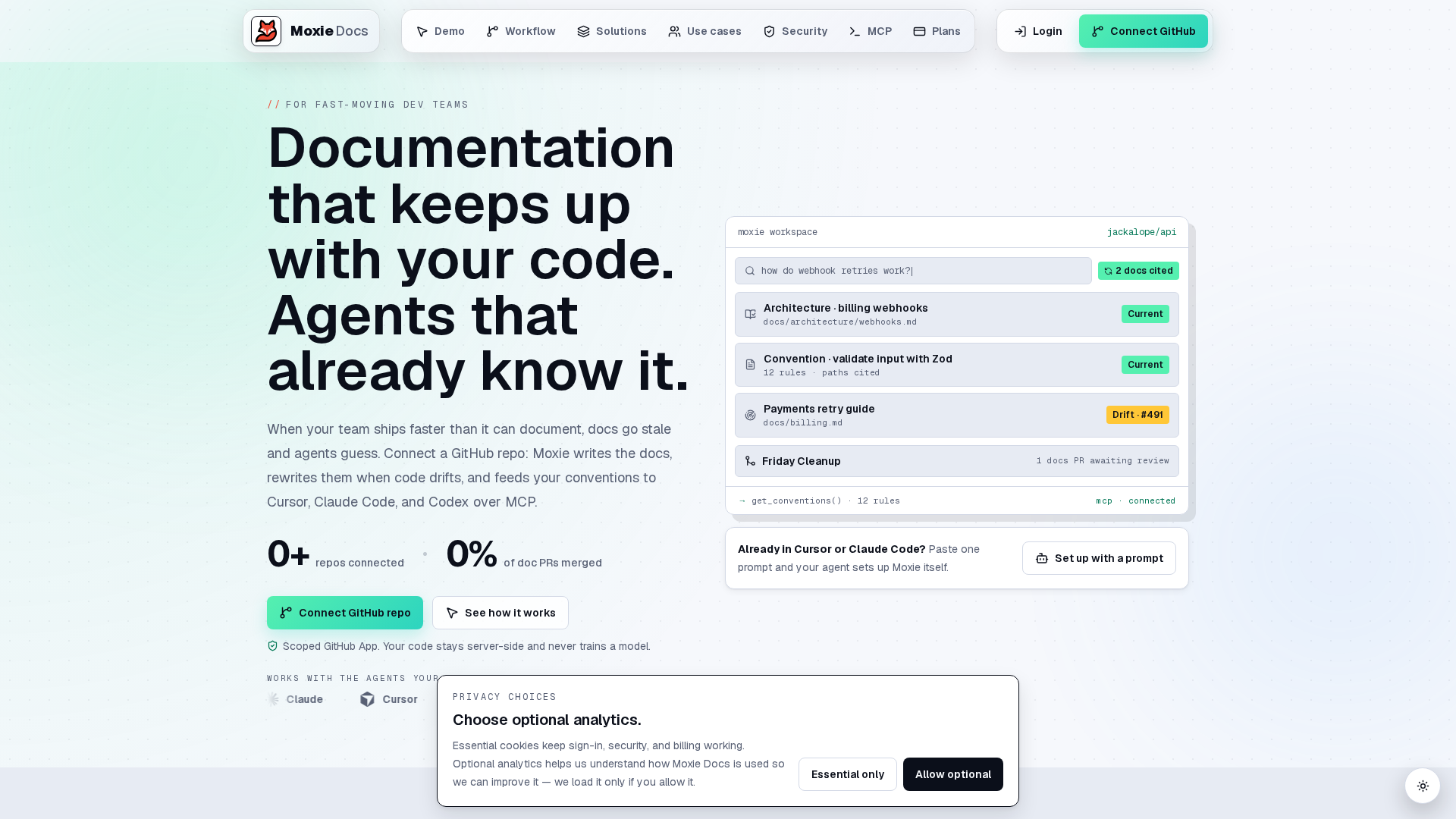
Set a standard your AI docs can actually keep. Moxie Docs turns coding conventions into living GitHub documentation, flags drift after every merge, and gives AI agents real code context. If you want governed docs instead of one-off outputs, start there.
Frequently Asked Questions#
Q1: What are the differences between AI and traditional coding conventions for documentation?#
AI conventions guide structure, naming, and context so machines can update docs reliably. Traditional rules mostly help humans read and write code.
Q2: How can AI coding conventions improve auto documentation in GitHub repositories?#
They make outputs more consistent, reduce missing context, and help tools track changes after each merge, so docs stay current with less manual cleanup.
Q3: What role do explicit coding guidelines play in AI-assisted software development?#
They set guardrails for agents and developers. Clear rules cut drift, lower review time, and improve trust in generated code and docs.
Q4: Which teams benefit most from governed AI documentation workflows?#
Fast-moving teams with many repos, frequent merges, and shared ownership gain the most. Tools like Moxie Docs fit well when accuracy must keep up with constant code change.
Conclusion#
Auto documentation helps you move fast, but AI documentation wins when your team needs repeatable quality. The real difference is not output speed. It is whether your docs follow shared rules, review gates, and traceable standards. IBM notes that inconsistent AI code generation breaks shared understanding unless teams define project-level rules IBM’s 2026 analysis. ETSI also frames AI documentation as a life cycle practice built on consistency, correctness, and stakeholder needs ETSI guidance. That is why governed conventions turn documentation into a durable workflow, not a one-off artifact.
Republish or cite this article
You're welcome to republish this piece in full or in part. We just ask that you credit the original with a link back. See our republishing guidelines.
Attribution snippet
<p>This article was originally published on <a href="https://moxiedocs.com/blog/comparing-ai-coding-conventions-in-auto-documentation-and-ai-documentation">Moxie Docs</a>.</p>Cite this article
The Moxie Docs team. "Comparing AI Coding Conventions in Auto Documentation and AI Documentation." Moxie Docs, July 2, 2026, https://moxiedocs.com/blog/comparing-ai-coding-conventions-in-auto-documentation-and-ai-documentation.
Read next
MoxieDocs vs DocuWriter.ai: Best Living Docs for GitHub
GitHub documentation tools matter—especially for teams using docs as code. This comparison cuts through the noise to show which tool, MoxieDocs or DocuWriter.ai, keeps your docs in sync with your codebase *without* the hassle.
Building an Enhanced MCP Feedback Loop for Coding Agents
Learn how to build an enhanced MCP feedback loop for coding agents. Practical guide to integrating automated testing, linting, and self-correction via MCP servers.