
Moxie Docs Review: AI-Powered Documentation for Modern Dev Teams
Discover how Moxie Docs leverages AI-powered technology to streamline documentation for modern software teams, boosting efficiency for developers and technical writers.
- documentation
- developer-experience
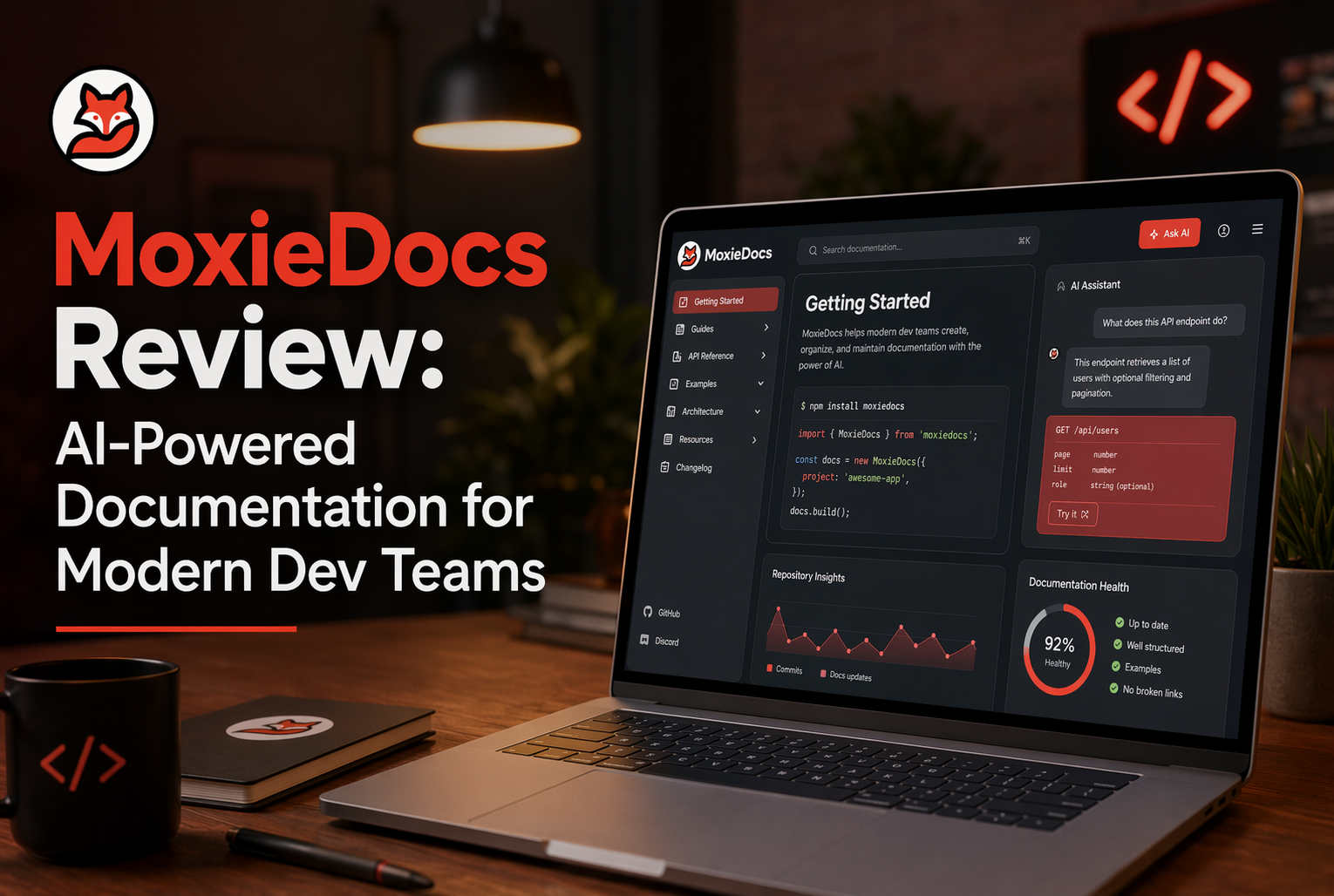
Quick Summary: Moxie Docs automatically syncs documentation with GitHub repos, flags when docs go out of date, and opens small cleanup PRs, saving teams time and keeping docs accurate. It also provides AI agents with live repo context through MCP, improving code assistance. It's best for fast-moving teams using GitHub who want to reduce manual doc updates and improve AI integration.
Teams ship fast, but docs break fast too. Moxie Docs targets that gap with AI Documentation that indexes GitHub repos, builds source-backed Code Documentation, and flags drift after merges. This review looks at whether its AI Documentation actually helps keep Developer Documentation in sync. I’ve reviewed doc workflows, repo tooling, and DevOps handoff pain for years, so I’ll focus on the practical stuff: fit, limits, cleanup flow, and where AI Documentation saves real team time.
What Moxie Docs Actually Does#
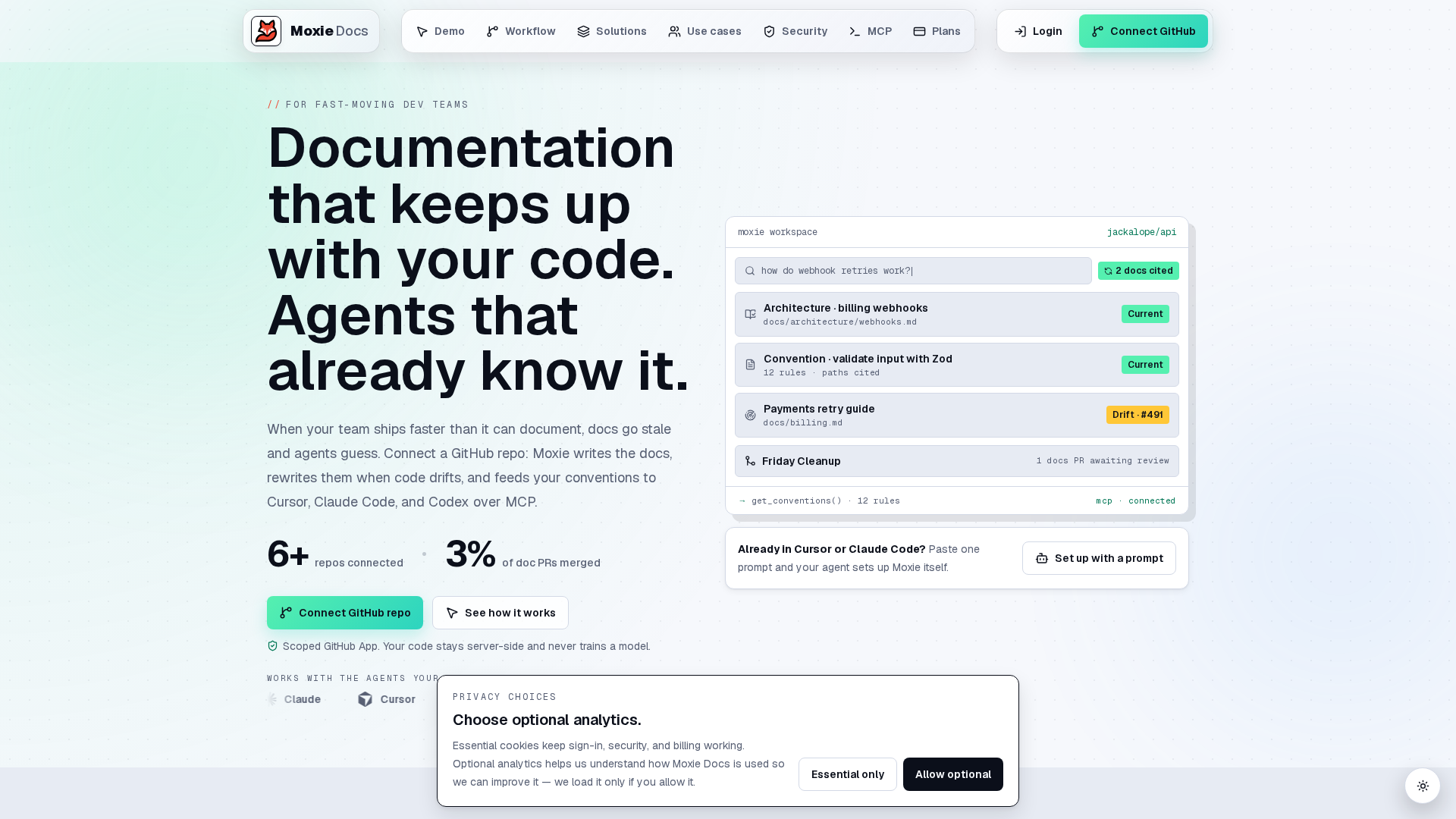
Moxie Docs turns a GitHub repo into living docs that stay tied to the source. It indexes the codebase, writes docs with source citations, and gives AI agents repo context through MCP instead of loose guesses.
Repository indexing and source-cited docs
- Moxie Docs scans your repository and maps code, files, and changes into docs you can trace back to the source.
- Its GitHub listing says it indexes repositories, generates living documentation, and exposes citation-backed repo context to AI agents through a hosted MCP endpoint GitHub submission.
- That matters for teams using AI heavily, because GitHub notes MCP tool access helps agents work with the right context and infrastructure GitHub Agentic Workflows.
Drift detection and cleanup PRs
- Moxie Docs watches for code changes that make docs stale.
- Then it opens scoped cleanup PRs instead of dumping a full rewrite on the team.
- That review flow fits how dev teams already work: small diffs, clear blame, easy merge.
Also Read: Living Documentation and AI Documentation: A Comparative Overview
Where It Helps Most for Engineering Teams#
Onboarding and architecture knowledge gets better when docs stay tied to the repo, not a stale wiki. New hires can see what services exist, how they connect, and what changed last week. That cuts the usual Slack hunt for tribal knowledge. Moxie Docs fits well here because it syncs with GitHub, flags drift, and can push cleanup PRs when docs fall behind.

AI agents and MCP-ready context matter when code assistants need live, trusted repo context. Anthropic says MCP is an open standard that connects AI systems to data sources and development tools through one protocol, which makes responses more relevant and reliable according to Anthropic. For teams using AI to write more code, Moxie Docs gives agents current codebase context instead of old notes, which helps cut wasted tokens and bad guesses.
Also Read: Moxie Docs vs DeepDocs: Which AI Documentation Tool Wins?
Pricing, Fit, and Trade-Offs#
Moxie Docs fits teams that want docs to stay tied to GitHub without adding wiki sprawl. The pricing page lists Starter at $29 for 5 repos and 1 seat, Pro at $79 for 15 repos and 10 seats, and Team at $199 for 50 repos with unlimited seats. That makes Pro the sweet spot for small dev teams, while Team suits platform groups and CTOs managing many services.

Watch repo limits, not just price. The FAQ says Cleanup PRs and weekly Friday Cleanup start on Pro, so Starter is lighter. Also check if your team wants docs-only PR review, since Moxie Docs never auto-merges changes.
Also Read: 8 Top AI Documentation Tools for Engineering Teams in 2026
Is Moxie Docs Worth It for Modern Dev Teams?#
Moxie Docs is worth it if your team ships fast and your docs keep falling behind. Its core value is simple: it syncs docs to GitHub repos, flags drift after merges, and serves repo context to AI agents through MCP, as shown on the product overview and FAQ.
Best fit:
- Teams using GitHub across many repos
- Dev teams using Cursor, Claude Code, or Codex
- Startups with thin docs and fast releases
Not the best fit:
- Small teams happy to update docs by hand
- Orgs that do not want AI-generated doc PRs
- Teams outside GitHub-first workflows
If stale docs slow onboarding or waste AI tokens, Moxie Docs solves a real problem.
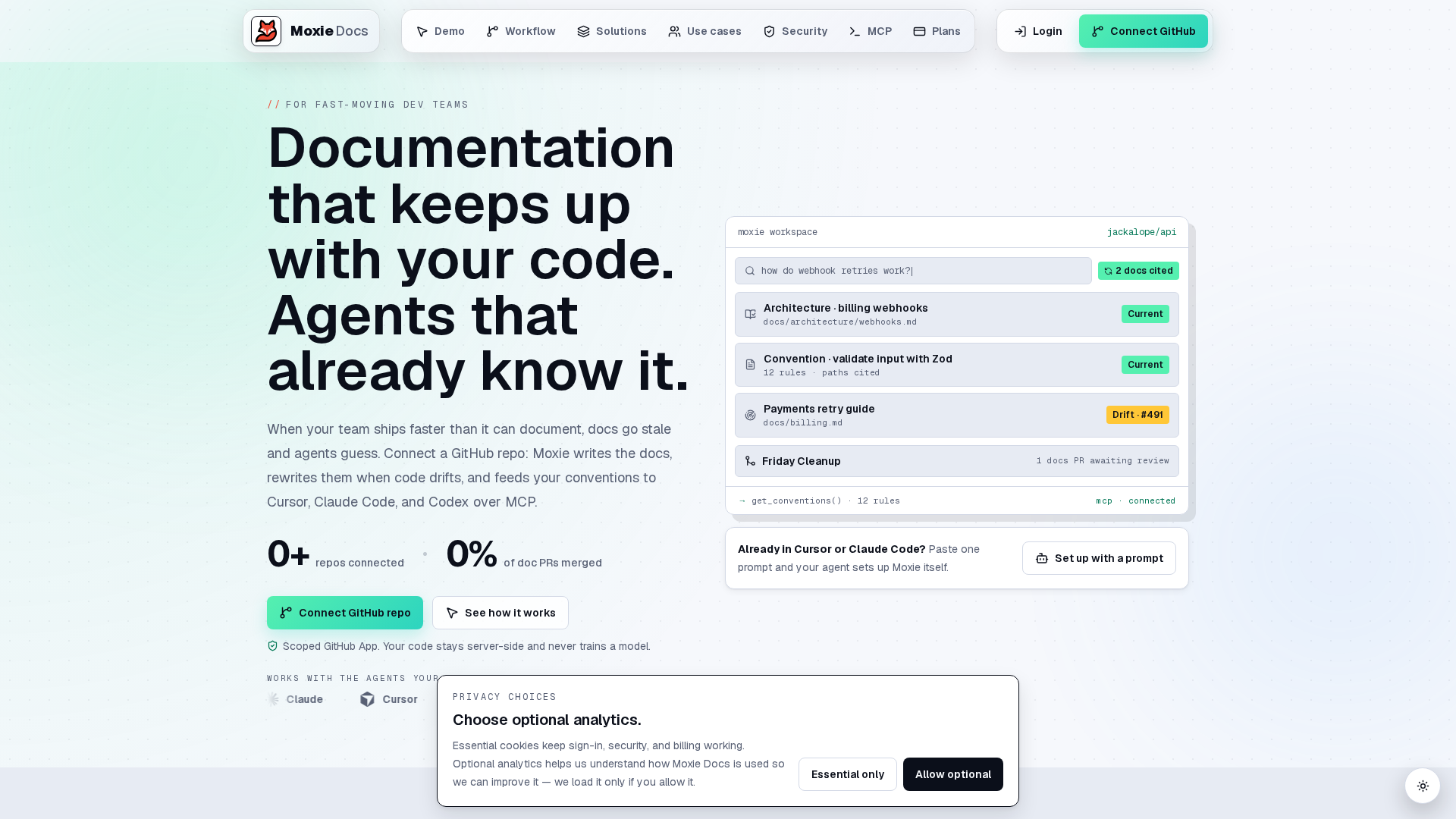
Ready to stop fixing stale docs by hand? Try Moxie Docs to sync GitHub changes, catch drift early, clean up docs with PRs, and give AI agents live repo context.
Frequently Asked Questions#
Q1: How does Moxie Docs automate documentation updates for evolving codebases?#
It syncs with GitHub, watches merges, spots doc drift, and suggests or opens cleanup PRs. That keeps docs tied to the live repo instead of a stale wiki.
Q2: What AI features does Moxie Docs offer for maintaining accurate developer documentation?#
It uses AI to draft updates, map code changes to docs, and pass current repo context through MCP to coding agents. That cuts bad guesses and token waste.
Q3: How can Moxie Docs integrate with GitHub repositories to keep docs synchronized?#
You connect repositories, set rules, and let Moxie Docs monitor branches and merges. It then refreshes docs from source changes and flags areas that need review.
Conclusion#
Moxie Docs stands out because it keeps docs tied to real repo changes, not stale wiki pages. Its GitHub sync, drift checks, cleanup PRs, and MCP support make it a strong fit for teams that want accurate docs and better AI context with less manual work.
Republish or cite this article
You're welcome to republish this piece in full or in part. We just ask that you credit the original with a link back. See our republishing guidelines.
Attribution snippet
<p>This article was originally published on <a href="https://moxiedocs.com/blog/moxiedocs-review-ai-powered-documentation-for-modern-dev-teams">Moxie Docs</a>.</p>Cite this article
The Moxie Docs team. "Moxie Docs Review: AI-Powered Documentation for Modern Dev Teams." Moxie Docs, June 26, 2026, https://moxiedocs.com/blog/moxiedocs-review-ai-powered-documentation-for-modern-dev-teams.
Read next
Living Documentation and AI Documentation: A Comparative Overview
Explore a detailed comparison of Living Documentation and AI Documentation, helping software teams and engineers choose the best practices for effective AI-assisted development.
AGENTS.md Explained: How to Write One File Every Coding Agent Can Read
AGENTS.md is the open standard for giving AI coding agents project context. Learn what it is, how it differs from CLAUDE.md and .cursorrules, and how to write one with a free generator.